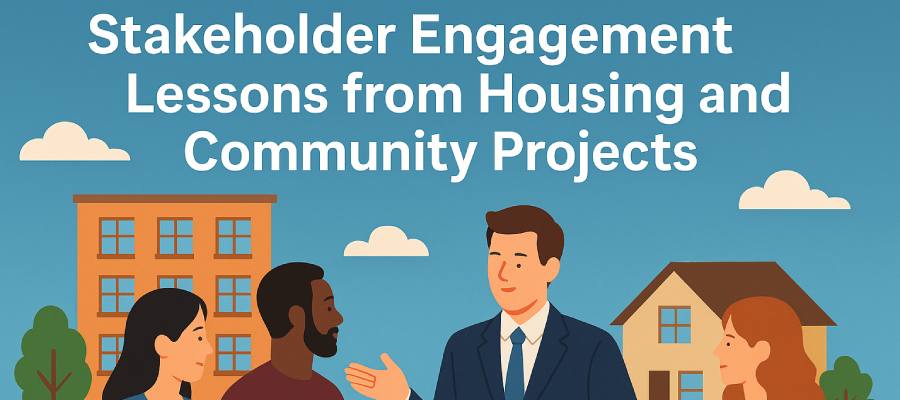
Stakeholder Engagement Lessons from Housing and Community Projects
Housing and community projects succeed or fail not just on technical execution but on the strength of stakeholder engagement. Whether led by nonprofits, municipalities, or public-private partnerships, these initiatives face intense scrutiny from donors, regulators, and community members alike. A well-designed building is not enough—what matters is how stakeholders are involved, how progress is communicated, and how trust is built across the entire lifecycle.
In this article, we’ll examine lessons from housing and community projects, highlight why stakeholder engagement is critical, and show how platforms like FolioProjects provide real-time transparency that makes funding and approvals possible. We’ll also provide practical steps for applying these lessons to future nonprofit and civic initiatives.
Table of Contents
- Why Stakeholder Engagement is Critical in Housing Projects
- Common Barriers to Effective Engagement
- Key Lessons from Real-World Community Initiatives
- How Real-Time Platforms Transform Engagement
- Detailed Housing Project Walkthrough
- Practical Steps for Nonprofits and Municipalities
- The Benefits of Transparent Engagement
- Future Directions for Community Project Accountability
Why Stakeholder Engagement is Critical in Housing Projects
Housing is deeply personal and highly political. Projects that alter neighborhoods—whether affordable housing, mixed-use developments, or community centers—impact residents, local governments, and investors in different ways. Stakeholder engagement ensures that:
- Community voices are heard: Residents can raise concerns and support initiatives when they feel included.
- Funders gain confidence: Donors and grant providers see transparent evidence of support and impact.
- Governments approve faster: Municipalities are more willing to approve projects with demonstrated community buy-in.
As explored in our post on stakeholder sentiment in sustainable development, perception and sentiment are not soft metrics—they directly influence project viability.
Common Barriers to Effective Engagement
Despite best intentions, many housing projects encounter barriers that stall momentum:
- Lack of transparency: Progress reports are delivered quarterly, leaving stakeholders in the dark.
- Fragmented communication: Donor CRMs, project plans, and community outreach happen in silos.
- Resistance from residents: Without ongoing engagement, local communities may resist projects they feel are imposed on them.
- Manual reporting overhead: Staff spend excessive time preparing reports instead of executing projects.
These barriers highlight the need for systems that streamline engagement and provide real-time visibility.
Key Lessons from Real-World Community Initiatives
Looking at past housing and community projects, several lessons stand out:
1. Early Engagement Reduces Resistance
Projects that engage residents early—before plans are finalized—tend to experience less pushback. This approach helps surface concerns and demonstrate responsiveness.
2. Transparency Builds Donor Confidence
Funders are more likely to commit when they can see progress in real time. Instead of static PDFs, live dashboards show whether milestones are being met.
3. Multi-Stakeholder Alignment is Essential
Housing projects often involve nonprofits, municipal governments, contractors, and community groups. Shared dashboards prevent miscommunication and ensure alignment.
4. Accountability Improves Long-Term Impact
Even after construction, transparent reporting on occupancy, energy efficiency, and community impact strengthens reputation and future funding prospects.
How Real-Time Platforms Transform Engagement
Traditional tools track tasks or donors but not engagement. That’s where real-time dashboards become transformative. Platforms like FolioProjects allow nonprofits and municipalities to:
- Display progress updates in real time through public dashboards.
- Capture community sentiment using HueFlux QR surveys.
- Configure notifications to keep stakeholders informed.
- Maintain strong security controls so sensitive information is appropriately shared.
This integration of lifecycle tracking, sentiment analysis, and transparency creates an engagement model far more robust than spreadsheets or CRMs alone.
Detailed Housing Project Walkthrough
To illustrate, let’s imagine a nonprofit affordable housing initiative supported by government grants and private donations.
Phase 1: Vision and Community Input
The nonprofit hosts open houses and QR-enabled surveys to gather input from residents. Feedback is visualized on a sentiment dashboard, showing funders that community voices are being heard.
Phase 2: Funding and Approval
Funders and municipal officials access a shared dashboard with project milestones, compliance checklists, and real-time community sentiment. Transparency reduces delays in funding approvals.
Phase 3: Construction and Updates
During construction, site signage includes QR codes linking to live dashboards. Community members can track progress, while donors see how funds are being applied.
Phase 4: Occupancy and Long-Term Impact
After completion, dashboards display outcomes: number of families housed, energy efficiency metrics, and community development indicators. This post-project accountability strengthens the nonprofit’s credibility for future grants.
Practical Steps for Nonprofits and Municipalities
Organizations considering this approach can follow these steps:
- Define key engagement metrics: Identify what matters most to stakeholders (e.g., families housed, sustainability, safety).
- Set up engagement dashboards: Use project documentation tools to track milestones and share progress.
- Deploy community input tools: Integrate surveys and QR codes for capturing sentiment in real time.
- Automate updates: Configure notifications to reduce manual reporting workloads.
- Balance transparency with security: Use access controls to protect sensitive donor or municipal data.
The Benefits of Transparent Engagement
When nonprofits and municipalities embrace transparent, real-time engagement, they unlock several benefits:
- Faster funding approvals: Transparency reduces hesitation from funders.
- Stronger community trust: Residents support projects they can monitor and influence.
- Reduced project risk: Early visibility into sentiment helps mitigate resistance before it escalates.
- Reputation enhancement: Organizations seen as transparent gain a competitive advantage in securing future grants and partnerships.
Future Directions for Community Project Accountability
Community projects are entering a new era of accountability. As ESG pressures and public expectations rise, real-time engagement platforms are no longer optional—they’re becoming essential infrastructure. Future housing initiatives will likely integrate IoT data, sustainability metrics, and more sophisticated stakeholder reporting.
By adopting these lessons today, nonprofits and municipalities can not only deliver successful housing projects but also set a new standard for transparency and impact.
For more insights, see our articles on stakeholder management techniques and building sustainability dashboards.